
Last Updated: November 15, 2026
Quick Summary
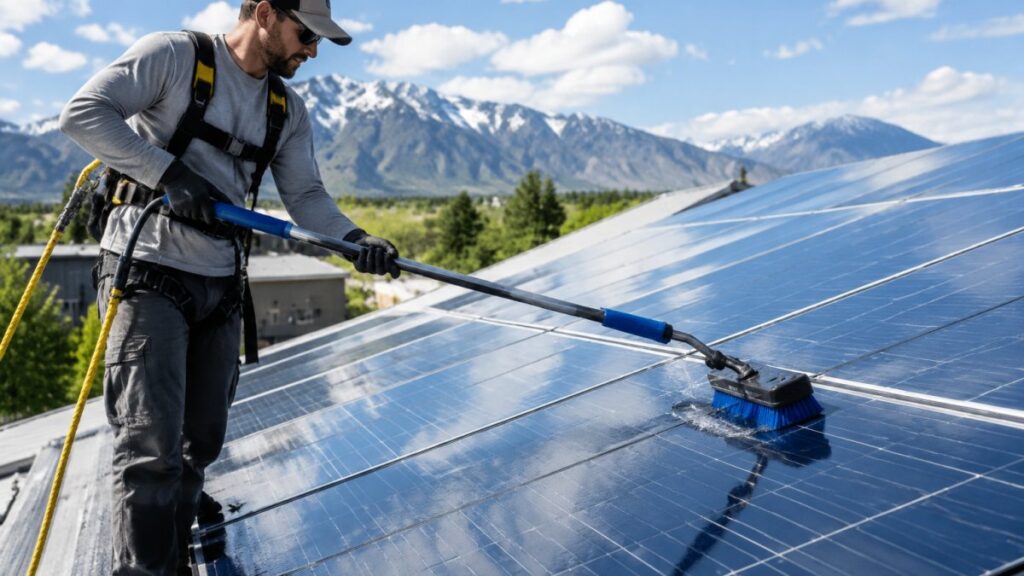
To clean solar panels safely, rinse loose dust first with a gentle hose spray, then wash with mild soap, lukewarm water and a soft brush, working early morning or late afternoon when panels are cool. Soak stubborn spots instead of scrubbing, rinse fully, and never use a pressure washer or walk on the panels.
- Many homes need cleaning once or twice a year, depending on pollen, dust, and nearby work.
- Mix one part white vinegar with four parts water for hard water spots, then rinse well.
- The job takes about an hour for a typical residential array.
- Use an extension pole from the ground rather than climbing on roof-mounted panels.
- Call a professional for second-story arrays, steep pitches, or any damage to glass, frames, or wiring.
Table of Contents
- Why Clean Solar Panels Matter for Output and Longevity
- Tools and the Best Soap to Clean Solar Panels
- Step-by-Step: How to Clean Solar Panels Safely at Home
- How to Clean Solar Panels on Roof Without a Ladder
- DIY vs. Professional Solar Panel Cleaning
- Request an Estimate for Hands-On Solar Panel Cleaning
- Frequently Asked Questions
Why Clean Solar Panels Matter for Output and Longevity
Dust, pollen, and bird droppings block sunlight before it reaches the cells. When you clean solar panels, you restore the light path and protect the glass from long-term staining. Panels can sit under a visible film of grime for months while owners rarely notice, because output drops slowly.
How Dust, Pollen, and Bird Droppings Cut Power Output
Soiling is the technical term for anything sitting on the panel surface. In our area it shows up in three main forms:
- Dust and dirt from spring winds and nearby construction
- Pollen that coats glass in a sticky yellow layer each spring
- Bird droppings that bake on and block a whole cell
A shaded cell drags down the whole module string, so one dirty corner can cost more power than the stain suggests.
How Often to Clean Solar Panels in the Wasatch Front
Many homes need cleaning once or twice a year, depending on surroundings. Pollen, dust, and nearby work can speed up soiling.
Rain helps but does not do the job, since it leaves mineral deposits as it dries. Watch your energy monitoring app: a slow slide in production with no other cause is your signal.
Tools and the Best Soap to Clean Solar Panels
A mild, non-abrasive soap mixed with lukewarm water is generally recommended for cleaning panels. Skip anything with grit, acid, or strong solvents. The tools matter just as much as the soap:
- A soft brush or soft sponge
- A microfiber cloth for drying edges
- An extension pole to reach without leaning
Never use a pressure washer on a panel surface. High pressure can force water past the frame seals.
Water Quality and Mineral Spotting
Hard water leaves spots that etch into glass over time. If your tap water is hard, dry the panels with a microfiber cloth instead of letting them air dry, and a final rinse with filtered water helps too.
How to Clean Solar Panels Safely With Vinegar
A diluted white vinegar solution cuts mineral film and hard water spots. Mix one part white vinegar with four parts water. Apply with a soft cloth, then rinse well. Vinegar is mildly acidic, so keep it diluted and never let it sit. Check your manufacturer instructions first. Some warranties limit what you can put on the glass.
Step-by-Step: How to Clean Solar Panels Safely at Home
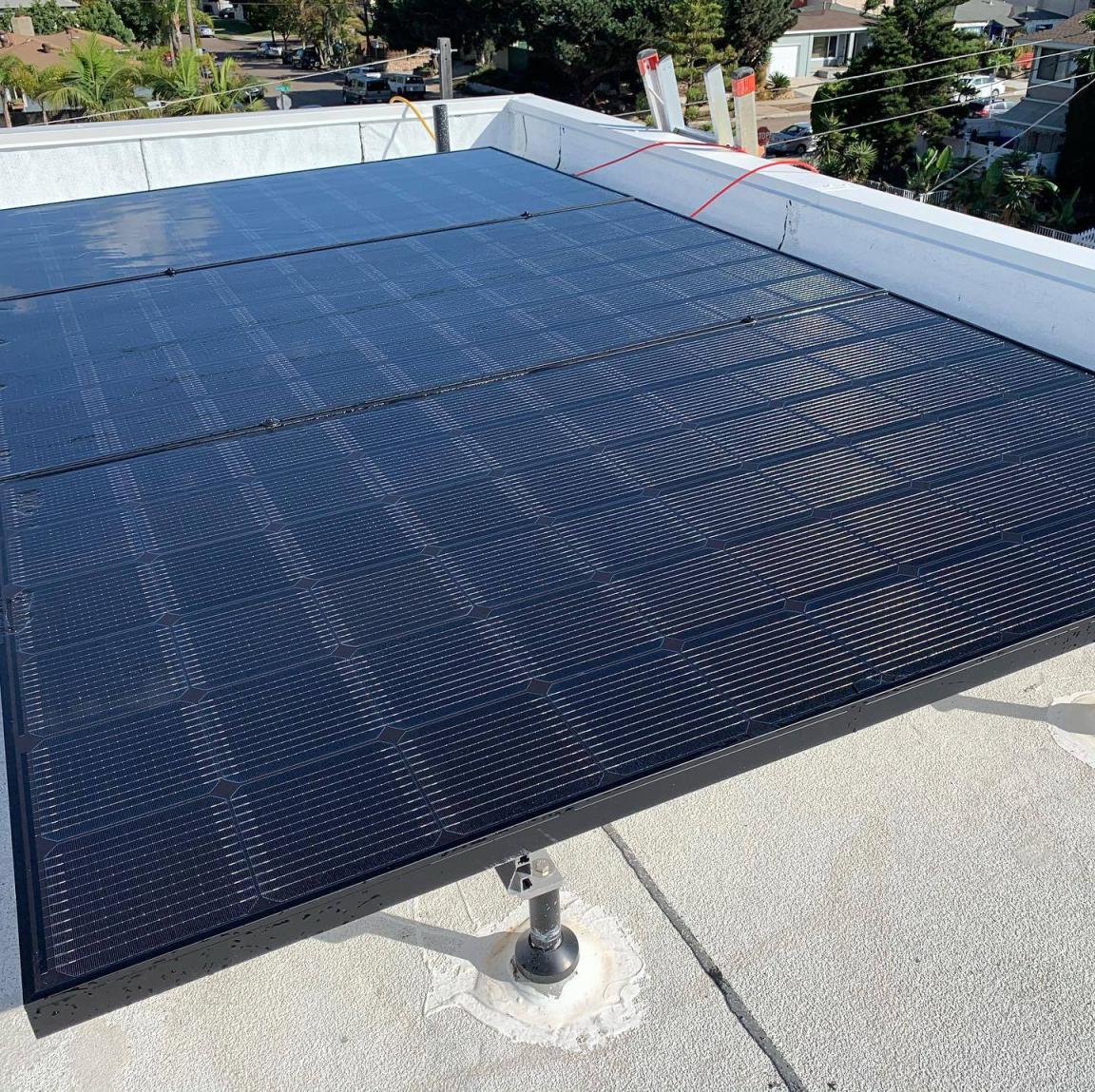
Follow this order of work, and the job takes about an hour for a typical residential array.
- Check the manufacturer’s manual first. Some systems want the array shut down before cleaning, and some warranties specify approved cleaners. Follow the system-specific shutdown instructions rather than assuming water makes the equipment safe.
- Work early morning or late afternoon. Cool panels are safer to touch and clean better. Glass that has baked in full sun can be hot enough to flash-evaporate water on contact.
- Rinse loose dust first with a gentle spray from the garden hose, working top to bottom so dirty water runs off the panels you have not reached yet.
- Wash with mild soap and a soft brush, one panel at a time, keeping the brush head flat so you are not pressing grit into the glass.
- Soak stubborn spots instead of scrubbing them. Bird droppings and baked pollen soften after a few minutes of dwell time; scrubbing dry debris is what scratches glass.
- Rinse fully so no soap residue dries on the glass.
- Dry edges with a microfiber cloth to stop water spots, especially if your tap water is hard.
Electrical and Thermal Safety Before You Start
Never spray water on hot panels or exposed wiring. Hot glass plus cold water is thermal shock, and it can crack a panel or stress a seal.
Do not treat the array as inert once the sun is low. DC conductors stay energized whenever the sun is up, and some systems have no easy disconnect at the roof.
Cleaning in Different Conditions
The right response changes with what is on the glass.
- Pollen: a sticky film that rain smears rather than removes. Rinse first, then wash with mild soap; do not dry-scrub pollen, which grinds it into the glass.
- Bird droppings: acidic and quick to bake on. Soak the spot for several minutes, then lift it with a soft cloth. Scraping a dry dropping can leave a permanent etch.
- Ash and wildfire fallout: fine and abrasive. Rinse gently before any contact, and avoid brushing dry ash across the surface.
Scrubbing a dry, gritty panel is the most common way homeowners scratch glass, and scratched glass is not a warranty item on most systems.
What to Avoid When Cleaning
- Pressure washers and high-pressure nozzles
- Abrasive scrubbing pads on anything but glass
- Harsh chemicals, acids, or solvent cleaners
Stepping on a panel can crack a cell you cannot see, and most warranties do not cover that damage.
Here is the order of work the article recommends, which takes about an hour for a typical residential array.
| Step | What to do | Note |
|---|---|---|
| 1 | Check the manufacturer’s manual first | Some systems need shutdown before cleaning |
| 2 | Work early morning or late afternoon | Cool panels are safer and clean better |
| 3 | Rinse loose dust first | Work top to bottom with gentle hose spray |
| 4 | Wash with mild soap and soft brush | Keep brush head flat, one panel at a time |
| 5 | Soak stubborn spots instead of scrubbing | Scrubbing dry debris scratches glass |
| 6 | Rinse fully | No soap residue should dry on glass |
| 7 | Dry edges with a microfiber cloth | Stops water spots, especially with hard water |
How to Clean Solar Panels on Roof Without a Ladder
The safest answer for roof-mounted panels is simple: you do not go up there. Use an extension pole with a soft brush from the ground. A garden hose with a gentle spray reaches most single-story arrays. For anything taller or steeper, hire a professional.
Stop-Work and Fall-Prevention Decision Guide
Use this checklist before any roof access. It centers on the two variables that drive most fall injuries: pitch and height.
- Is the roof pitch steep? A low-slope roof you can walk with traction is a different job from a steep pitch where a misstep becomes a slide. If you are not sure of the pitch, treat it as steep and stop.
- Is the surface slick? Wet shingles, morning dew, frost, and pollen film all reduce traction. If the roof is wet or icy, stop.
- Is there more than one story? Height multiplies the consequence of any slip. A single-story array reachable from the ground is a DIY candidate; a two-story array is not.
If you answer yes to any line, call a crew with rope access and aerial platform certification. Fall risk is the number one danger in this work, and it is the one risk a homeowner cannot train around in an afternoon.
Why You Should Not Climb on the Panels
Panels are not a walking surface. The glass is thin, the frame is not built to carry a person, and the cells underneath crack invisibly, creating a hot spot that degrades the whole string.
There is a second reason to stay off the roof: the wiring. Junction boxes, MC4 connectors, and conduit runs are often mounted at the array edge, exactly where a foot lands.
When to Call a Professional
Call a crew when the array is on a second story or higher, when the pitch is steep, when panels sit near the edge or a skylight, or when you see any damage to glass, frames, or wiring. A professional crew brings fall protection, rope access, and aerial platform training. Our team holds OSHA, rope access, and aerial platform safety certifications, and we clean by hand so stuck-on grime comes off without scratching the glass.
DIY vs. Professional Solar Panel Cleaning
DIY makes sense for a single-story array you can reach safely from the ground. It stops making sense the moment a ladder, a steep pitch, or damaged wiring enters the picture.
Professionals also spot problems early: cracked glass, loose mounts, and failing seals. Our guide on whether solar panel cleaning is worth it breaks down the cost-benefit math, and you can meet our team before you book.
Hand cleaning is effective for stuck-on grime, which needs agitation to come off, and it avoids scratching the glass.
Request an Estimate for Hands-On Solar Panel Cleaning
Cleaning solar panels safely comes down to three things: the right tools, the right conditions, and knowing when to stop. If your array is on a roof you would rather not climb, that is our job. Salt Lake City Window Cleaning brings over 15 years of experience and eco-friendly products to jobs across the Wasatch Front. Request solar panel cleaning or call our team to schedule a free estimate.
A dirty array quietly costs you power every sunny day. Let our certified crew handle the roof work while you watch production climb. Get started with Salt Lake City Window Cleaning and protect both your panels and your property.
Frequently Asked Questions
Can you clean solar panels with a garden hose?
A garden hose works for a light rinse, but low-pressure water alone will not remove stuck-on dirt, pollen, or bird droppings. Use a gentle spray to loosen debris first, then follow with a soft brush or microfiber cloth and a mild soap solution. Avoid high-pressure nozzles, which can crack glass or force water behind the frame. For roof-mounted arrays, keep both feet on the ground and work from the edge with an extension pole rather than climbing.
How often should solar panels be cleaned?
Most homes do well with a cleaning once or twice a year, but the right schedule depends on your surroundings. Pollen season, nearby trees, dust, and bird activity all speed up soiling. In the Wasatch Front, spring pollen and summer dust are the biggest culprits. Check your energy monitoring for a slow drop in output, and clean when performance slips or when you can see a visible film on the panel surface.
Is it safe to walk on solar panels?
No. Walking on solar modules can crack the glass, void the manufacturer’s warranty, and create a serious fall risk. Panels are not designed as a walking surface. Clean from the ground with an extension pole, or hire a crew trained and certified for roof access. Never step on a panel to reach a stubborn spot; the damage is often invisible at first but shows up as reduced output later.
When should you hire a professional to clean solar panels?
Hire a professional when your array is roof-mounted on a steep pitch, when panels sit more than one story up, or when hard water and mineral deposits have built up. A licensed, insured crew carries the fall protection and liability coverage that protects you if something goes wrong. At Salt Lake City Window Cleaning, our team is OSHA-certified for rope access and aerial platform use, so roof work is handled safely.
